About Faculty

Information about the faculty, its vision, and mission.

Vision
Vision
To be a transforming and inspiring faculty of the latest technological advancements to develop communities through innovative knowledge.
Mission
Mission
The faculty of information Technology is committed to provide transformative experiences through academic excellence, cutting-edge research and innovation, industry-relevant skills, community-centric IT solutions, and leadership in the digital era to be able to survive today's fiercely competitive and technologically oriented world.

Dean’s Welcome

Welcome message from the Dean.

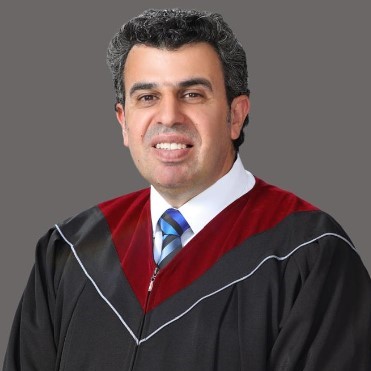
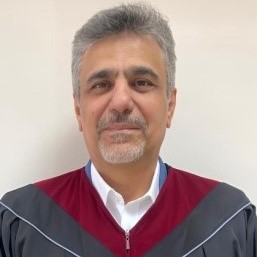
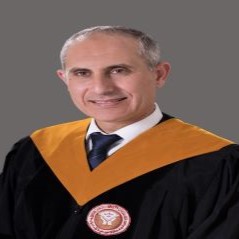
Dr. Ahmad Ababneh

Acting Dean of Faculty of Information Technology
Dean's Image

Welcome to the Faculty of Information Technology. As the Dean, I am delighted to welcome our future innovators and leaders in this dynamic and constantly changing field. The digital era is here, reshaping every aspect of our lives and speeding up our move into a digital-centric world. This transition highlights the crucial role of IT in the public and private sectors, pushing us towards a more interconnected and effective society.

At our Faculty, we are committed to preparing the next generation of IT professionals---those who will lead and define the future of digital transformation, both locally and globally. Our mission is to equip you with the skills to contribute significantly to a smart society. We achieve this through a curriculum that perfectly marries theoretical knowledge with practical application, fostering innovation at every step.

Our Carefully designed study plans, aligned with international standards and industry demands, guarantee a thorough educational experience. Presently, we provide three advanced BSc programs: Computer Science, Data Science and Artificial Intelligence, and Cybersecurity. Every program is crafted to push and broaden your skills, readying you for the vibrant IT landscape.

I invite you to join us on this journey to shape the future of technology and society. Welcome to IT, where technology is integrated with life for a better human experience.

Academic Departments

Information about various academic departments.

Computer Science

Computer Science

The Computer Science department develops skilled professionals who excel at creating cutting-edge digital solutions.
  • 134 Credit Hours
  • 60% Minimum accepted grade
Data Science and Artificial Intelligence

Data Science and AI

The Data Science and AI department trains experts in using data and artificial intelligence to craft innovative solutions that transform communities.
  • 134 Credit Hours
  • 60% Minimum accepted grade
Cybersecurity

Cybersecurity

The Cybersecurity department prepares professionals to create secure digital systems, ensuring protection against modern threats.
  • 134 Credit Hours
  • 60% Minimum accepted grade

Facilities & Labs

Information about the facilities and laboratories.

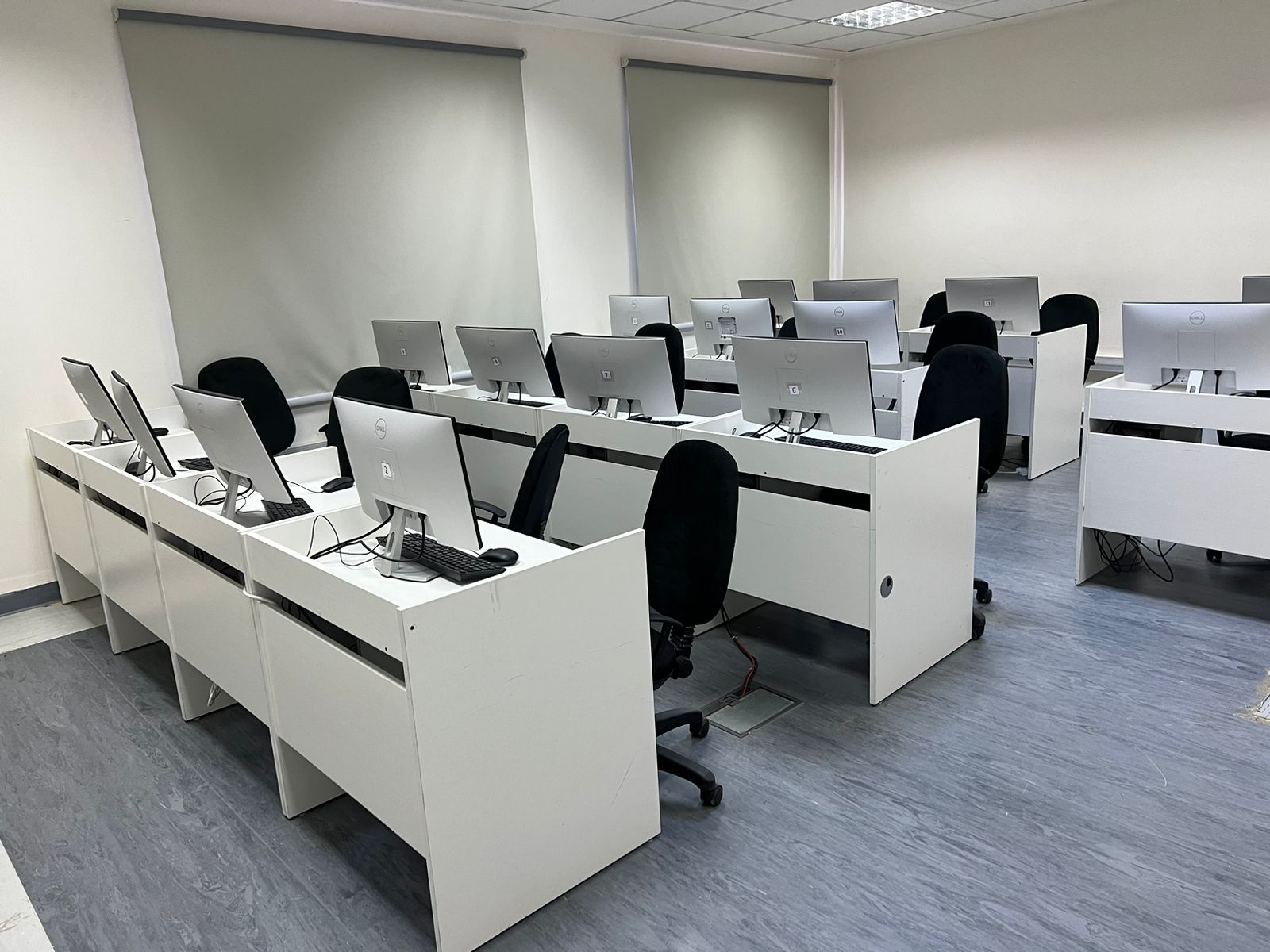
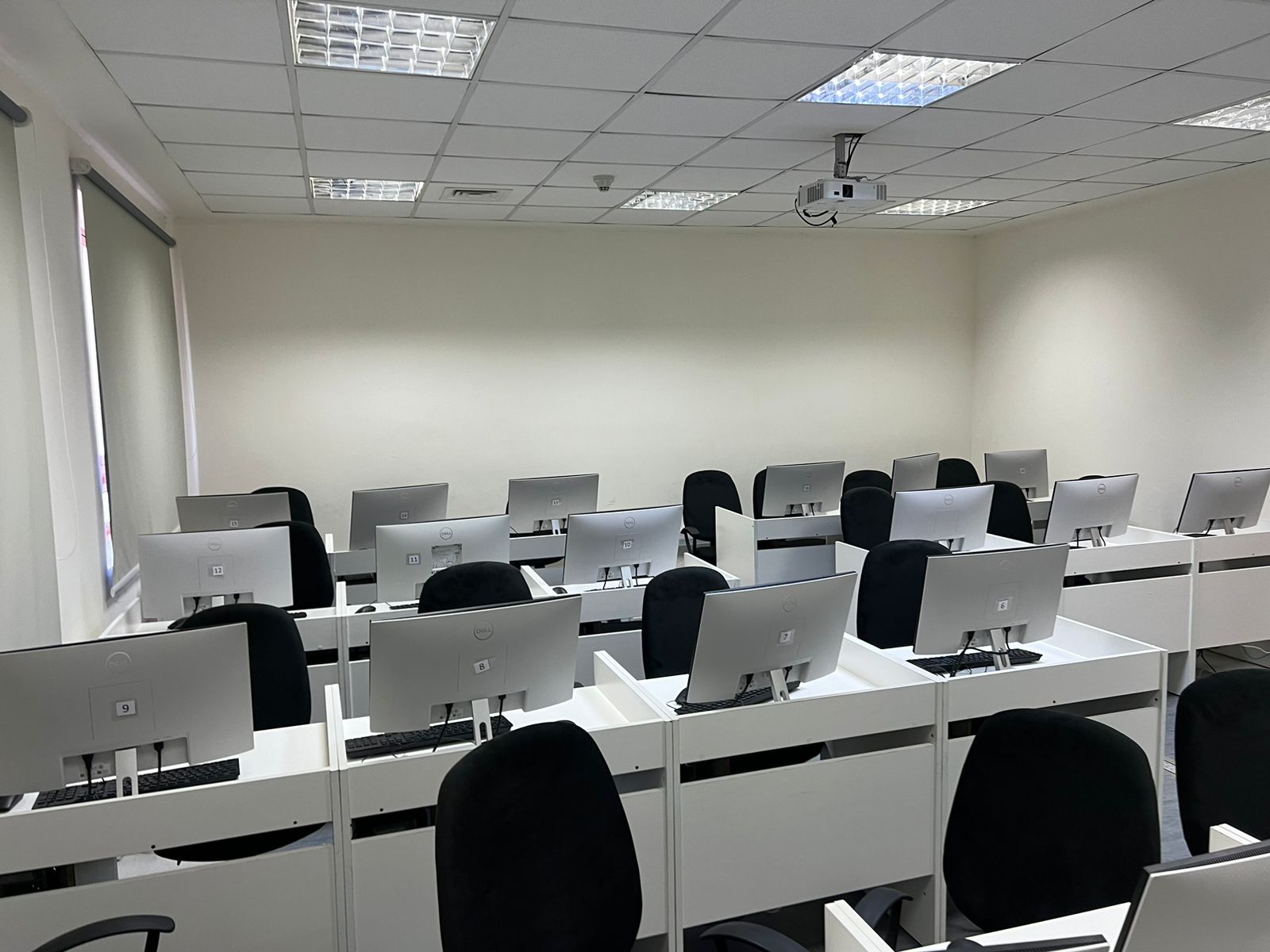
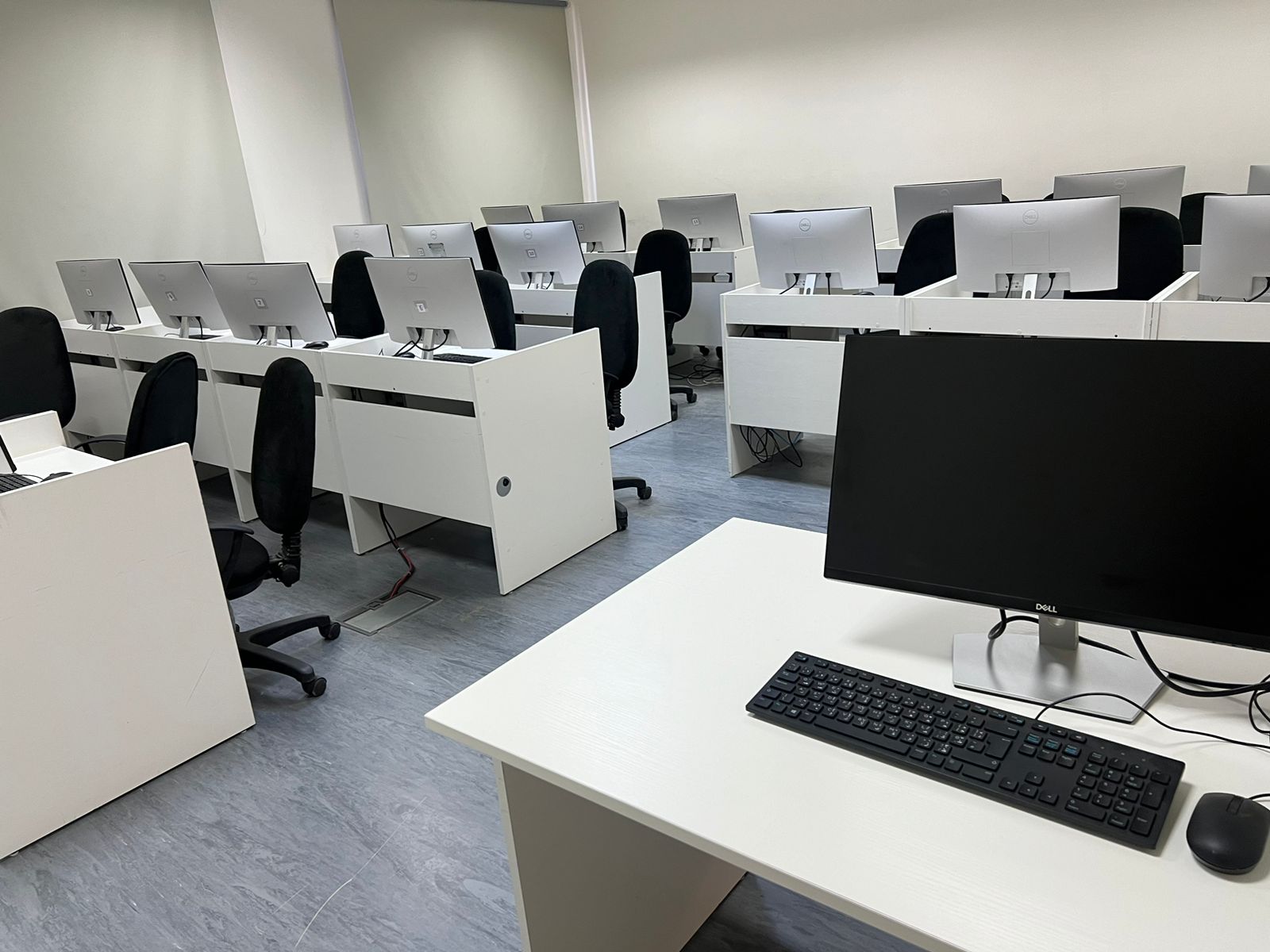
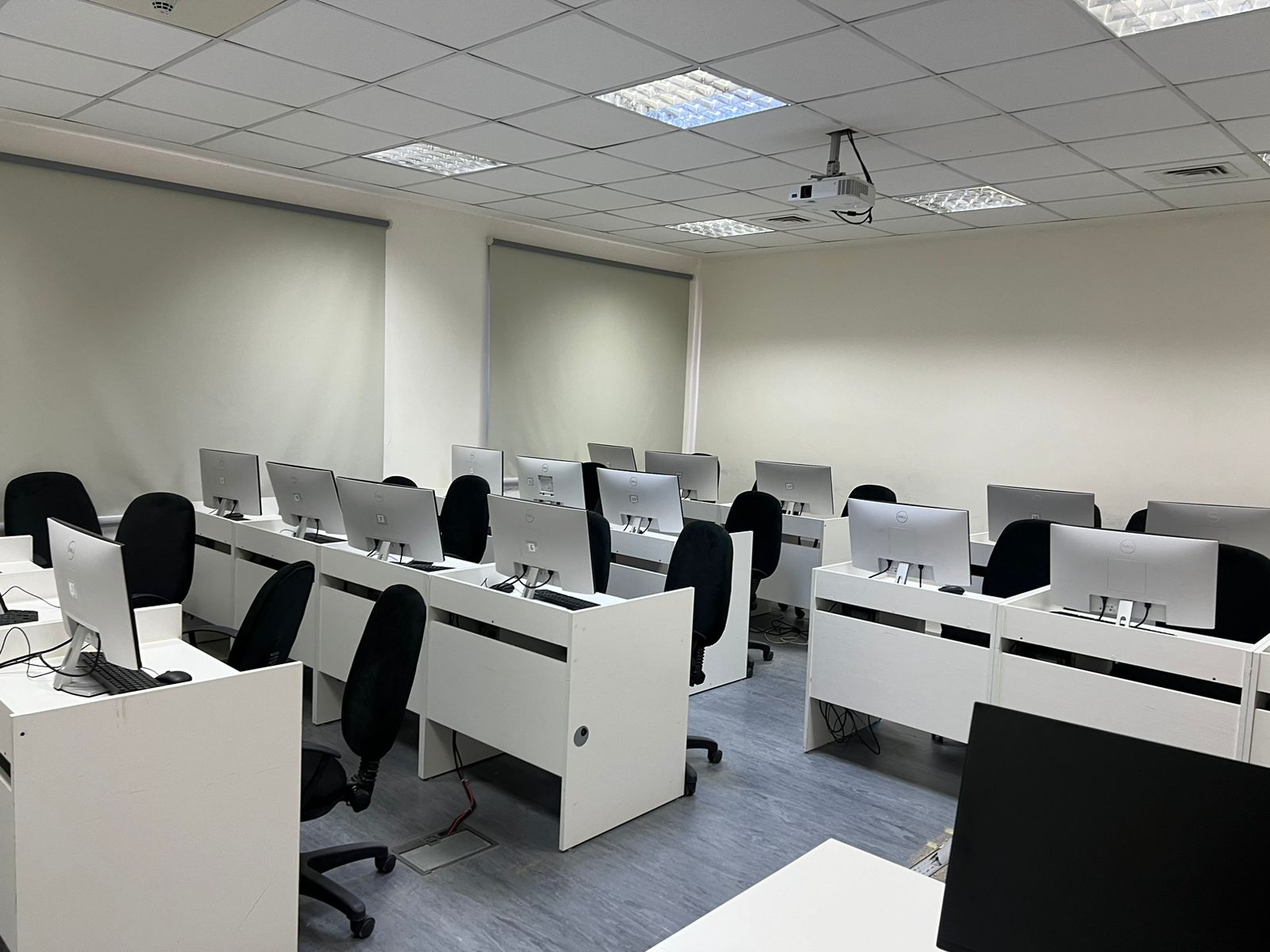
SA-G03: 31 desktop
Image 1
Image 2
Image 3
Image 4
There is 30 Dell Desktop in the Lab SAG03 with the following specification:
Storage: SSD
Operating System: Windows 10 Enterprise 64-bit (10.0, Build 19045) (19041.vb_release.191206-1406)
Processor: Intel(R) Core(TM) i5-6500 CPU @ 3.20GHz (4 CPUs), ~3.2GHz
Memory: 4096MB RAM
Available OS Memory: 3976MB RAM
graphics card name and Chip type: Intel(R) HD Graphics 530
Speakers Speakers (Synaptics HD Audio)
One Hp admin Pc in lab SAG03 with the following specifications:
Storage: SSD
Operating System: Windows 10 Enterprise 64-bit (10.0, Build 19045) (19041.vb_release.191206-1406)
Processor: Intel(R) Core(TM) i7-6700 CPU @ 3.40GHz (8 CPUs), ~3.4GHz
Memory: 16384MB RAM
graphics card name and Chip type: Intel(R) HD Graphics 530
Speakers Speakers (Realtek High Definition Audio)
SA-G11: 31 desktop
Image 1
Image 2
Image 3
Image 4
One thinkCenter admin Pc in lab SAG11 with the following specifications:
Storage: SSD
Operating System: Windows 10 Enterprise 64-bit (10.0, Build 19045) (19041.vb_release.191206-1406)
Processor: Intel(R) Core(TM) i7-4790 CPU @ 3.60GHz (8 CPUs), ~3.6GHz
Memory: 8192MB RAM
Graphics Card Name and Chip Type: Microsoft Basic Display Driver
Speakers: Realtek High Definition Audio
There is 30 Dell Desktop in the Lab SAG11with the following specification:
Storage: SSD
Operating System: Windows 10 Enterprise 64-bit (10.0, Build 19045) (19041.vb_release.191206-1406)
Processor: Intel(R) Core(TM) i5-6500 CPU @ 3.20GHz (4 CPUs), ~3.2GHz
Memory: 4096MB RAM
Graphics Card Name and Chip Type: Intel(R) HD Graphics 530
Speakers: Speakers (Synaptics HD Audio)
SA-F11: 31 desktop
Image 1
Image 2
Image 3
Image 4
There is 11 Dell Desktop in the Lab SAF11with the following specification:
Storage: SSD
Operating System: Windows 10 Enterprise 64-bit (10.0, Build 19045) (19041.vb_release.191206-1406)
Processor: Intel(R) Core(TM) i5-6500 CPU @ 3.20GHz (4 CPUs), ~3.2GHz
Memory: 4096MB RAM
Graphics Card Name and Chip Type: Intel(R) HD Graphics 530
Speakers: Speakers (Synaptics HD Audio)
There is 13 Dell Desktop in the Lab SAF11with the following specification:
Storage: SSD
Operating System: Windows 10 Enterprise 64-bit (10.0, Build 19045) (19041.vb_release.191206-1406)
Processor: Intel(R) Core(TM) i5-2400 CPU @ 3.10GHz (4 CPUs), ~3.1GHz
Memory: 4096MB RAM
Graphics Card Name and Chip Type: NVIDIA GeForce GT 220
Speakers: Speakers (High Definition Audio Device)
4 thinkCenter admin Pc in lab SAG11 with the following specifications:
Storage: SSD
Operating System: Windows 10 Enterprise 64-bit (10.0, Build 19045) (19041.vb_release.191206-1406)
Processor: Intel(R) Core(TM) i7-4790 CPU @ 3.60GHz (8 CPUs), ~3.6GHz
Memory: 8192MB RAM
Graphics Card Name and Chip Type: Microsoft Basic Display Driver
Speakers: Realtek High Definition Audio
There is 3 Hp elite Desk Desktop in the Lab SAF11with the following specification:
Storage: HDD
Operating System: Windows 10 Enterprise 64-bit (10.0, Build 19045) (19041.vb_release.191206-1406)
Processor: Intel(R) Core(TM) i7-6700 CPU @ 3.40GHz (8 CPUs), ~3.4GHz
Memory: 16384MB RAM
Graphics Card Name and Chip Type: Intel(R) HD Graphics 530
Speakers: Speakers (Realtek High Definition Audio)
BA-G38: 21 Dell Desktop
Image 1
Image 2
Image 3
Image 4
There is 21 Dell Desktop in the Lab BAG38 with the following specification:
Storage: 500GB SSD M.2
Processor: Intel Core i7/i9 4.7 speed or above Min cache 16MB
Memory: 16GB
Graphics Card Name and Chip Type: Dedicated GPU RTX series 4 6 GB or 8 GB
Monitor: 27-inch FHD, built-in IPS Ergo Stand
Digital Forensics and Ethical Hacking lab : 20 laptops
Image 1
Image 2
Image 3
Image 4
Laptop Asus Vivobook 15 X1502ZA Core i5 with the following specifications:
Storage: 512GB SSD
Operating System: Windows 10 Enterprise 64-bit
Processor: 12th Generation Intel Core i5-12500H 3.30GHz up to 4.50GHz, 18MB, 8 Cores - 16 Threads
Memory: 32GB RAM DDR4
Graphics Card Name and Chip Type: Intel Iris Xe Graphics
Audio: SonicMaster Built-in speaker, Built-in microphone

News

Latest news and updates.

news1
15JUN
Job Advertisement - Computer Science

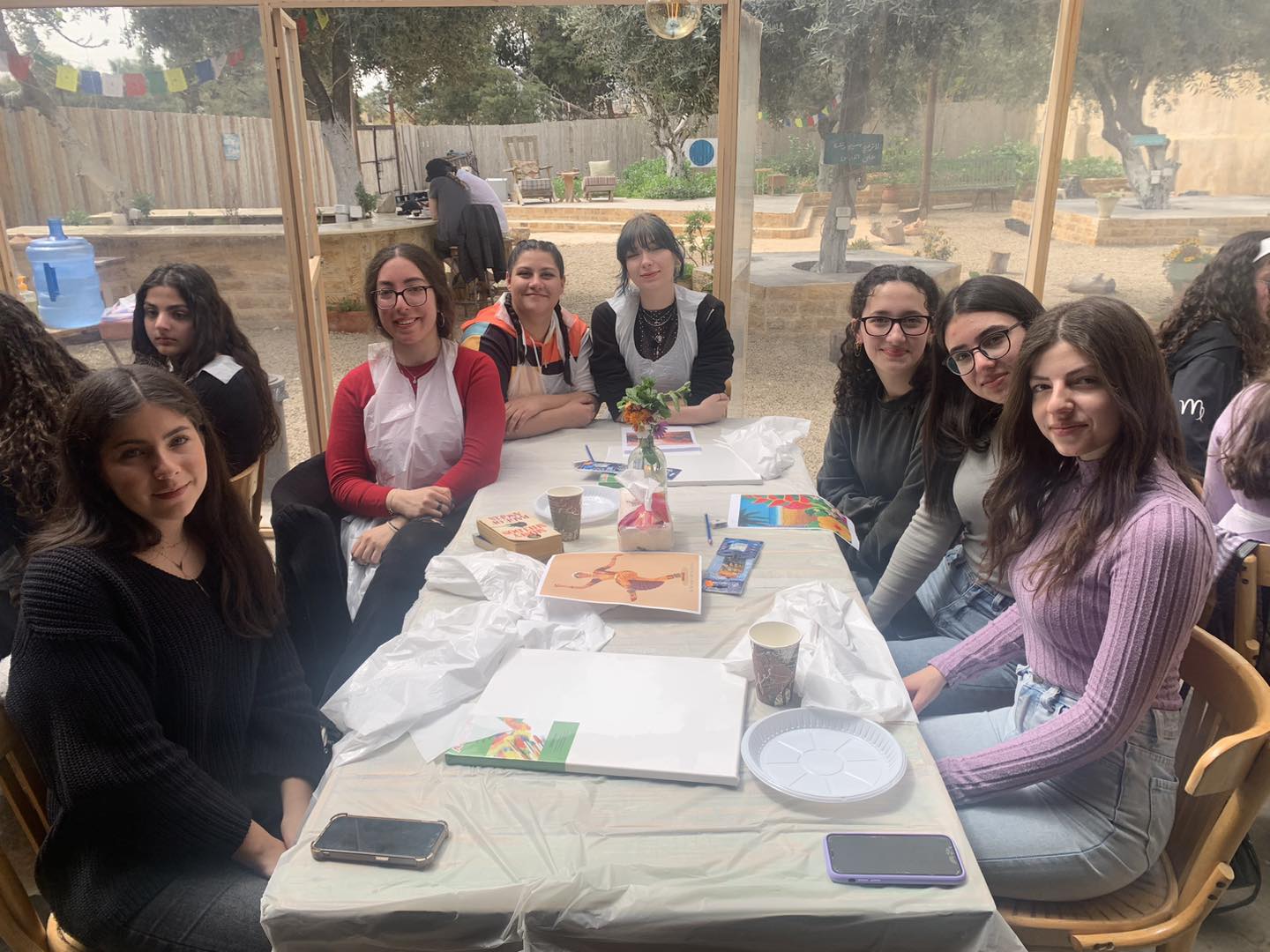
Empowering Women Through Art: American University of Madaba and University of North Carolina at Chapel Hill Launch Exchange Program

news2
15JUN
Job Advertisement - Computer Science

Suitable Candidates should send their up-to-date CV to academics@aum.edu.jo OR fill job application at www.Jobs.aum.edu.jo.

Publications & Activities

Information about publications and activities.

T. Althobaiti and Y. Sanjalawe, "Securing cloud computing from flash crowd attack using intrusion detection system based on white shark optimizer and ensemble classifier", Computer Systems Science and Engineering, 2023.
A. Al-Daraiseh, Y. Sanjalawe, S. Al-E’mari, S. Fraihat, M. Bany Taha, and M. Al-Muhammed, "Cryptographic grade chaotic random number generator based on tent-map", Journal of Sensor and Actuator Networks, 2023.
S. Al-E’amri, Y. Sanjalawe, D. Alsmadi, E. Alduweib, and A. Alharbi, "Employing mutual information feature selection and lightgbm for intrusion detection in IoT", ICIC Express Letters, 2024.
S. Al-E’mari, Y. Sanjalawe, A. Al-Daraiseh, M. Bany Taha, and M. Aladaileh, "Cloud datacenter selection using service broker policies: A survey", Computer Modeling in Engineering Sciences, 2023.
S. Al-E’mari, Y. Sanjalawe, and S. Frihat, "Detection of obfuscated tor traffic based on bidirectional generative adversarial networks and vision transform", Computers and Security, 2023.
Y. Sanjalawe and S. Al-E’mari, "Abnormal transactions detection in the ethereum network using semi-supervised generative adversarial networks", IEEE ACCESS, 2023.
Y. Sanjalawe and T. Althobaiti, "DDoS attack detection in cloud computing based on ensemble feature selection and deep learning", Computers, Materials & Continua, 2023.
Y. Sanjalawe and S. Ale’mari, "Cloud computing simulators: A review", in 24th International Arab Conference on Information Technology (ACIT2023), Ajman, UAE, 2024.
A. Ababneh and Y. Sanjalawe, "An efficient text classification technique based on a neural network and noise-words removal", in 24th International Arab Conference on Information Technology (ACIT2023), Ajman, UAE, 2023.
S. Al-E’mari and Y. Sanjalawe, "A review of reentrancy attack in ethereum smart contracts", in 3rd International Conference on Computing and Communication Networks (ICCCNet-2023), Scopus Indexed, Manchester, UK, 2023.
Sh. Makhadmeh, Y. Sanjalawe and H. Fakhouri, "Intrusion Detection System using Modified Arithmetic Optimization Algorithm for Large-scale IoT", International Conference on Cybersecurity Resiliency, 2024.
S. Al-E’mari, Y. Sanjalawe, Sh. Makhadmeh and H. Alqudah, "Digital Forensics Meets Blockchain: Enhancing Evidence Authenticity and Traceability", International Conference on Cybersecurity Resiliency, 2024.
S. Al-E'Mari, Y. Sanjalawe and H. Alqudah, "Integrating Enhanced Security Protocols with Moving Object Detection: A Yolo-Based Approach for Real-Time Surveillance", International Conference on Cybersecurity Resiliency, 2024.

Learning Resources

Resources available for learning.

Textbooks and Reference Books

Core Textbooks: List the primary textbooks for each course, ensuring they are up-to-date with the latest scientific theories and technologies.
Supplementary Books: Include books that provide alternative explanations or advanced topics not fully covered in core textbooks.
Reference Books: Recommend dictionaries, encyclopedias, and handbooks relevant to each discipline for deeper exploration of topics.

Online Resources

E-Learning Platforms: Moodle, edX, Coursera, and Udemy
Scientific Journals: Access to various databases

Laboratory Resources

Lab Manuals: Guides and protocols for laboratory
Safety Guidelines: Resources on laboratory safety practices and protocols.
Equipment Manuals: Instructions and troubleshooting guides for laboratory hardware and software.

Libraries and Archives

Digital Libraries: Access to digital copies of books, journals, and articles.

Gallery

Gallery of images and media.